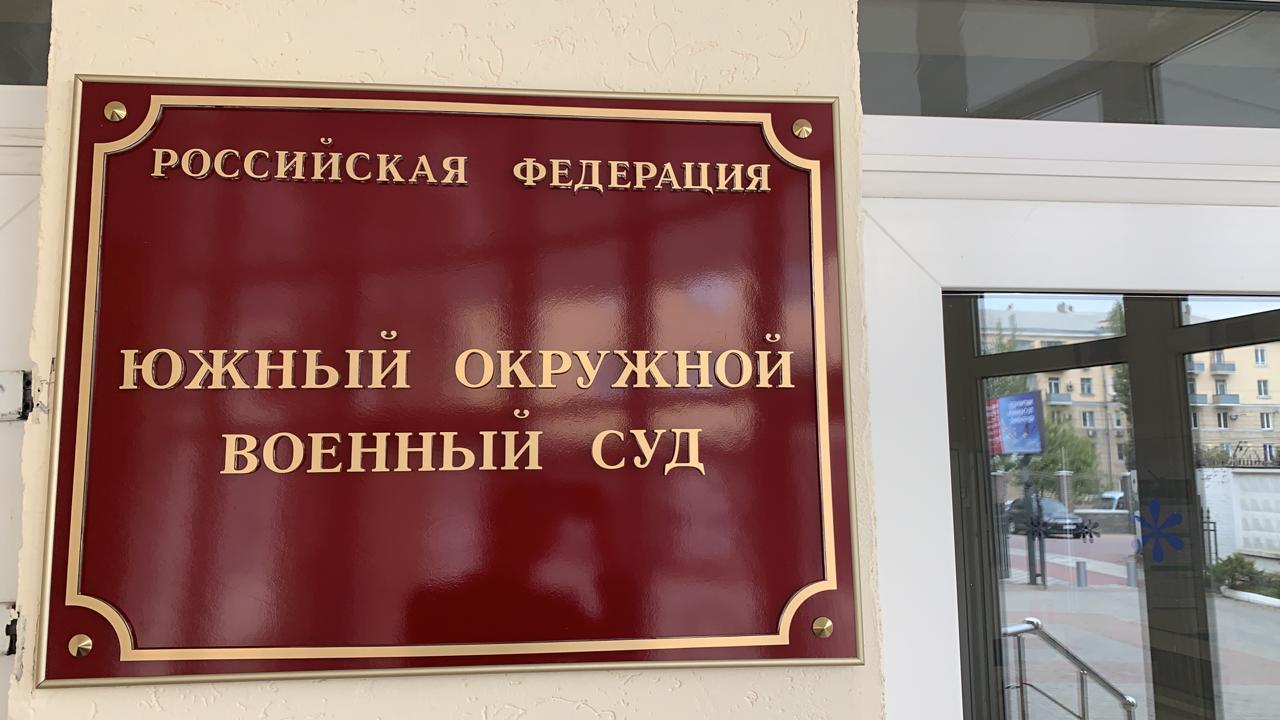
The Southern District Military Court handed down its verdict on Alexander Skrabunov, who was accused of carrying out sabotage missions for the Ukrainian secret services, including the bombing of a car in which Vladimir Malov, the executive secretary of ‘United Russia’ in Nova Kakhovka, was travelling. The court found him guilty under articles relating to high treason, as well as on five counts of committing terrorist acts and using explosives. According to the sentence handed down, he has been sentenced to life imprisonment in a maximum-security penal colony, with the first five years to be served in prison, as well as a fine of 400,000 roubles.
The ‘If Only There Were No War’ project notes that Skrabunov was abducted in Nova Kakhovka on 3 February 2024, later charged with attempting a terrorist attack and a terrorist attack resulting in the death of a person, and placed in a pre-trial detention centre. However, until today, the details of his prosecution had remained unknown.
Particular attention is drawn to the fact that the criminal case against a resident of occupied Nova Kakhovka was not heard in a court in the occupied territory, as required by international humanitarian law, but in the Southern District Military Court, which is located in Rostov-on-Don, Russia. The participation of Russian judge Kirill Krivtsov in the proceedings calls into question the independence and impartiality of the court, as the case concerns hostilities in an armed conflict in which one party is the country of which the judge is a national, and the other is the country of which the defendant is a national.
Indirect evidence of the court’s bias is the time spent in the deliberation room, which amounted to no more than 19 hours, of which only 4 were spent actually deliberating. It seems doubtful that, in such a short period, the court was able to make a full and objective assessment of all the circumstances relating to the 13 criminal counts and to weigh up the entirety of the evidence, the presentation of which required 20 court hearings.
Furthermore, the case serves as clear evidence of the argument that the Russian judicial system ignores the fact of an international armed conflict. Ukraine’s lawful and natural right to self-defence against military aggression by the Russian army is interpreted by the court as terrorist activity directed against the Russian state. Such an interpretation contradicts international concepts of terrorism as enshrined in the Shanghai Convention.
The practice of disregarding the international armed conflict is described in detail in the joint study ‘Denial of the Right to a Fair Trial as an International Crime during Russia’s War against Ukraine: Context, Practice, Law and Prospects’, which provides well-reasoned evidence that such prosecutions are aimed at justifying military aggression against Ukraine.