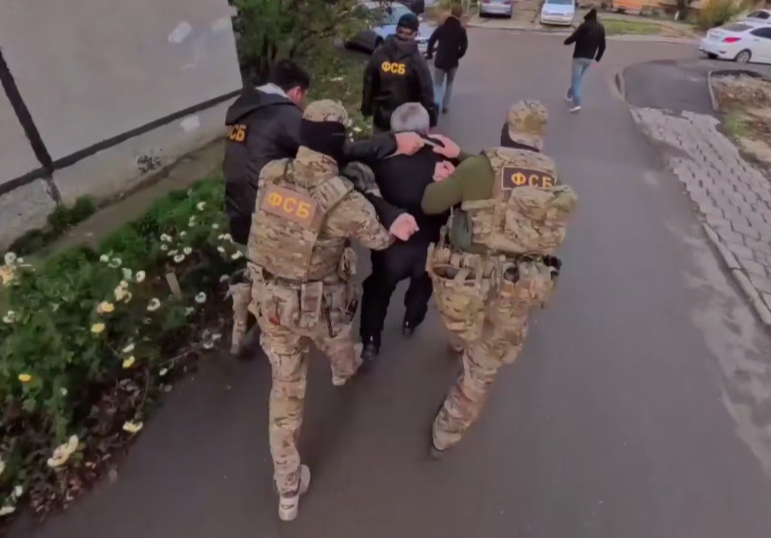
One in every thirteen convictions for high treason handed down by Russian courts takes place in occupied Crimea. The ‘Crimean Process’ reached these conclusions based on its own analysis of judicial practice and a comparison with data provided by the human rights project ‘First Department’. Crimean human rights activists noted that the number of such cases on the peninsula continues to rise compared with previous years, whilst local judges’ adherence to procedural standards is deteriorating ever more noticeably.
In particular, the experts noted that a significant proportion of verdicts are handed down within a timeframe that does not appear sufficient for a comprehensive examination of the circumstances surrounding charges of such a particularly serious offence as treason. In Sevastopol, there was a recorded instance where a criminal case was heard in its entirety in two minutes, and several other cases in one and a half hours.
“It is quite obvious that this time is not sufficient even to comply with all the procedural requirements laid down by law, let alone to present evidence, ensure the equality of the parties, and carry out a full and comprehensive assessment of the circumstances. It is likely that the judges already have a preconceived idea of the verdict and are merely going through the motions of a trial,” the organisation noted.
A separate analysis was carried out into the factors of dependence and bias amongst Crimean judges authorised to hear cases involving charges of treason and espionage. All five judges of the Supreme Court of Crimea who are involved in the prosecution of local residents under these charges are – former Ukrainian judges who are defendants in criminal cases of treason and are wanted by Ukrainian law enforcement agencies. Furthermore, all five have previously been implicated in politically motivated prosecutions that demonstrated their dependence on the FSB. Both judges of the Sevastopol City Court involved in hearing cases of this nature are judges who have moved to occupied Crimea from other Russian regions; by definition, they cannot adopt an impartial stance, as they are representatives of the occupying power.
Among other examples of the deterioration in standards of access to fair justice is the transparency of court proceedings. All trials concerning high treason are held in camera, and in two-thirds of cases, the time and date of the pronouncement of sentences are published on the official website considerably later than the pronouncement of the verdict itself. At the same time, the prosecution clearly has preferential access to information about the verdicts and uses this information to present the story in a one-sided manner. Of the 22 verdicts covered by the Russian media this year, there was not a single instance in which journalists published the position of the defendant, the defence lawyer or their own observations of the trial.
Furthermore, a distinctive feature of the coverage of treason trials is the clear focus of reports on links with Ukraine. In only 1 out of the 21 cases examined was this emphasis absent from the headlines. Compared with last year, the proportion of such reports has risen from 93 per cent to 95 per cent. At the same time, propaganda is increasingly emphasising not merely links with Ukraine, but specifically cooperation with the Ukrainian security services. Another notable emphasis is the portrayal of the defendant as an ‘opponent of the special military operation’. The focus on the negative attitude towards Russian aggression displayed by those convicted of treason is a new trend aimed at intimidating that section of the Crimean population which actively expresses dissent towards the actions of the Russian army.