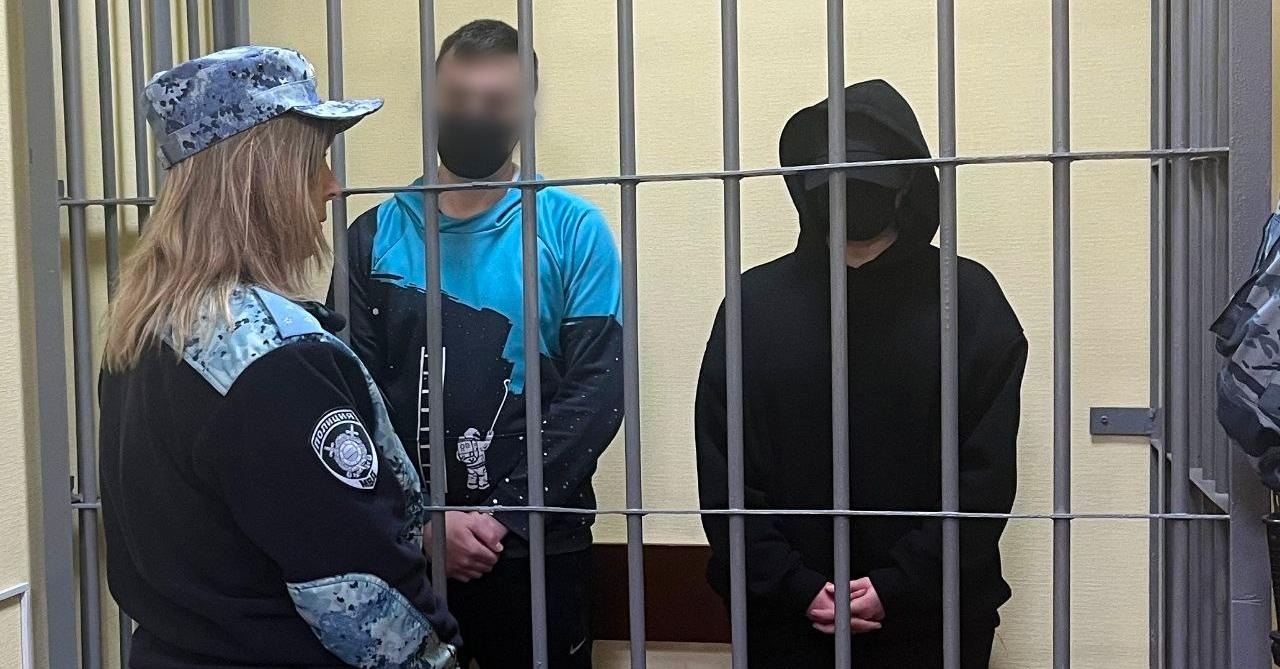
The Supreme Court of Crimea has found a man from the Orenburg region, who was living in Yalta, guilty of treason, and his partner, a native of the Odessa region of Ukraine, guilty of espionage. According to the ‘Tribunal: The Crimean Episode’ project, the woman in question is Kristina Markova, who was abducted on her way to work on 23 July 2024. The court sentenced the man to 17 years’ imprisonment, to be served in a strict-regime penal colony with restrictions on his freedom for 1 year and 8 months, and the woman to 15 years’ imprisonment, to be served in a general-regime penal colony.
According to the Crimean Public Prosecutor’s Office, which supported the prosecution in court, the Yalta resident, being opposed to the special military operation, made contact in 2024 with a representative of the Ukrainian security service, to whom he expressed his willingness to assist foreign intelligence in activities against Russia. He received a task from his handler to provide information on weapons and military equipment located within the city limits of Yalta. The man enlisted his partner to assist with these activities. In July 2024, the young man took photographs of military
equipment, whilst the defendant filmed military vessels. The man then sent all the information gathered to a representative of a foreign state via a messaging app.
The entire trial and the pronouncement of the verdict took place behind closed doors on the pretext that the case file contained documents classified as state secrets. However, an exception was made for the court’s press office and the Federal Security Service (FSB). This points to a selective approach on the part of the court regarding the transparency and openness of legal proceedings. Furthermore, information about the defendants was concealed on the court’s official website, which prevented the public from being notified in advance of the venue and time of the hearings in this case. Moreover, information regarding the date of the sentencing was not accessible to the general public either the day before or on the day of the announcement, as the section containing details of court hearings was not functioning during that period.
Furthermore, the independence and impartiality of the presiding judge in the trial raise legitimate doubts, as the verdict was delivered by the former Ukrainian judge Viktor Sklyarov, against whom Ukrainian law enforcement agencies are conducting proceedings on charges of high treason. This circumstance may have influenced the judge’s decision, particularly in light of factors such as the allegations of collaboration with the Ukrainian security services and the defendant’s place of birth.
It is also worth noting the brevity of the court’s deliberations — the court set aside just one day to assess all the evidence, the degree of guilt and other circumstances of the case involving two defendants at once, of which only 10 hours were actual working time. This may indicate that the verdict had been predetermined long before the trial concluded.
An equally important aspect of the persecution of the Yalta residents is the information campaign in the Crimean and Russian media, which showed signs of presenting the verdict in a one-sided manner from the perspective of the prosecution and the FSB Directorate. The position of the defence and the defendants was not represented in the publications. Furthermore, before the verdict came into force, a number of publications and social media pages labelled the defendants as ‘agents of Kyiv’ and ‘SBU spies’, which points to the campaign’s aim of justifying the repression against the civilian population in the occupied territory. The defendants’ perception as guilty was also influenced by their detention in a cage. The use of cages constitutes a gross violation of standards of justice and is regarded as treatment that degrades human dignity.
It is also important to note that the information regarding the date on which the alleged criminal acts were committed (July 2024) coincides with the date of Kristina Markova’s abduction — 23 July 2024. Markova herself reported that she was held for eight months in Simferopol’s Pre-Trial Detention Centre No. 2 without charge, in complete isolation, and was then forced to sign documents stating that she had been officially detained in April 2025. The practice of enforced disappearances followed by charges of treason or espionage is described in detail in a joint study by the ‘Crimean Process’ and the Houses of Human Rights – ‘The Process of Enforced Disappearances of Civilians in the Temporarily Occupied Territories of Ukraine’.